

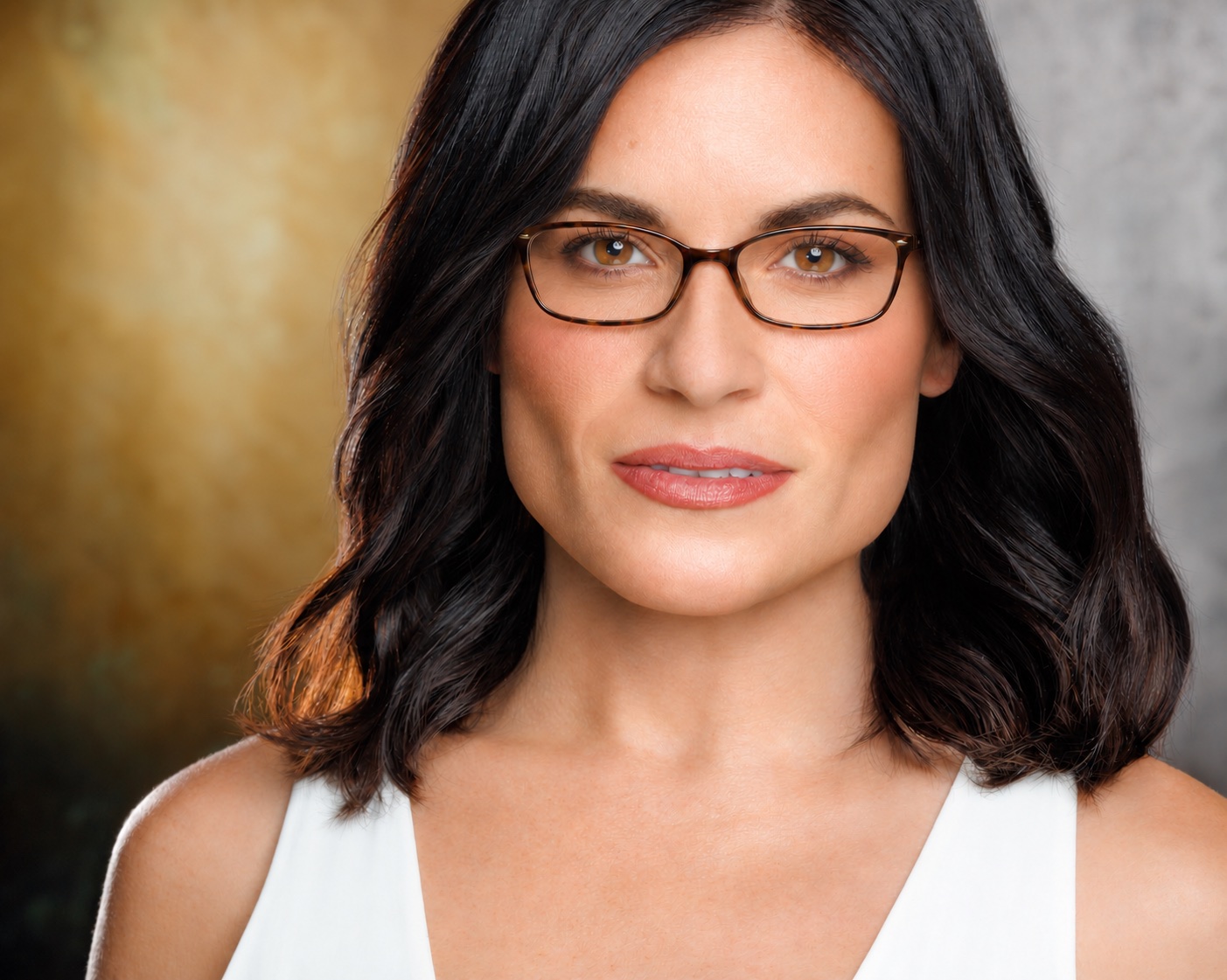
Actor Headshots With Glasses: Should You Wear Your Frames?
The best argument for actor headshots with glasses is sitting on your nightstand. If you reach for those frames every morning, wear them in self-tapes and feel naked answering the door without them, I want to see what you look like in them. The more interesting question is whether that picture should lead your submissions. To answer it, start with the person who will actually walk into the audition.
When actor headshots with glasses earn a place in your portfolio
Think about your last three auditions. Were the glasses on when you slated? Did you keep them on through the scene? If you wore them all three times, a glasses-on headshot gives your rep something genuinely useful. Casting can follow the same face from a submission photo to the first seconds of a tape. That continuity matters more to me than any blanket rule about eyewear.
Now imagine you wear contacts when you work but love a pair of chunky black frames in photographs. Bring them if you like. Just ask what the picture adds. If the whole pitch is “now I look like a professor,” try the scene first. A professor could be twenty-eight, sleep deprived and barely holding office hours together. The part worth photographing is the moment a student catches them bluffing. Your frames can stay for that conversation if they belong there.
Bring the pair you actually wear
Your everyday pair has one significant advantage over the pair you borrowed from a stylist. You already know how to live in it. You can look down and back up without catching a temple in your hair. You know whether the bridge slips when you laugh. The less time you spend managing your face, the more attention you have for the person across from you.
Give the lenses a clean before you step on set. Bring a cloth and a case so you can set them down between looks. If you own two pairs, bring both and explain which one you use most. A slim metal rim and a heavier acetate frame might produce different pictures, especially against your eyebrows. That is something we can test in thirty seconds. Buying new glasses for a possibility on a shot list is a much more expensive experiment.
Let the photographer solve the reflection
A reflection becomes a problem when it covers the part of the eye we need to see. A small highlight along the edge of a lens can live quite happily in a portrait. A bright rectangle squarely over the pupil takes over the conversation. Before committing to a whole setup, I want to see one frame with your eyes toward camera and another with your head turned the way it naturally turns when you listen.
If the reflection lands badly, I can change the relationship between you, the light and the camera. That might mean moving the light, changing its height, or moving my own shooting position. My least favorite solution is asking you to keep your chin at a peculiar angle for the next twenty minutes. The instant you have a real response, your chin will go where it likes. I would rather light the position where you look alive.
Shoot one honest comparison
Keep the shirt, crop, background and light the same for a short sequence. First wear the glasses. Then take them off. Use the same simple piece of direction both times. Imagine the person opposite you finally admitting something you suspected last week. Give yourself a second to hear it. We want to see how you receive the news, which tends to be more interesting than what you think your face should be doing.
Compare those frames side by side at phone size. Do your eyes still hold attention in the glasses-on version? Do you recognize the second face as the person who shows up to work? Are you narrowing your eyes because you took off the lenses you need to see your photographer? If so, tell me. Squinting at a blur across the room is an entirely reasonable human response and a lousy acting note.
Choose a lead picture your rep can use
There is a practical reason to be selective. Actors Access lists two free photos with its Starter membership. If you plan to use those two slots, both pictures need a job. An open, playful commercial frame with glasses and a quieter theatrical portrait without them can give a rep two distinct choices. Two nearly identical smiles in the same sweater, separated only by a thin piece of metal, may give them one choice twice.
Try this with a friend who understands your work. Give them two short role descriptions and your two pictures. Ask which photo they would submit for each part and what detail led them there. If they point to the way you are listening or to a flash of mischief, you have learned something. If their entire explanation is “the one with glasses,” look again at what you were doing inside the frame. Our guide to building a lasting headshot portfolio walks through how to give each image a purpose.
Make the submission match the audition
Suppose a breakdown asks for someone who can gently deliver difficult news. You have one picture where your glasses are on and your attention feels patient and steady. You have another where they are off and you look ready to interrupt. Lead with the patient picture if it fits how you would play the scene. If the audition instructions specify an appearance, follow those instructions. Otherwise, use your judgment about the character and what you can comfortably reproduce on tape.
Before your session, send your photographer a recent phone portrait wearing the frames and a note about how often you audition in them. That tells me more than a dozen reference pictures of someone else looking fabulous in tortoiseshell. Browse our Los Angeles actor headshot portfolio for examples of how eyes carry a close-up. If you are deciding between two pairs for your own shoot, contact the studio and tell us which one you would wear to an audition tomorrow.
About the author
Michael Roud is a Los Angeles photographer and director with 17 years of experience photographing actors, celebrities and brands. He has completed more than 30,000 shoots. His studio specializes in director-led actor headshots.